



In these five sustainability stories, MBA students turned coursework, internships, and school resources into real careers. They launched climate startups, pivoted into ESG advisory, and closed the gap between business acumen and environmental mission.
Real Stories, Real Impact
Sustainability is no longer a niche elective squeezed into the final semester of an MBA. It is increasingly woven into core curricula, offered as a full specialization, and – perhaps most importantly – becoming a lucrative career destination for a growing number of graduates.
But choosing to study sustainability in an MBA is only the beginning. The more interesting question is what students do with it. How do you translate case studies on circular economies or ESG frameworks into a real role, a funded company, or a meaningful pivot?
The five alumni in this article answered that question differently. One founded a fintech company in Nigeria after spotting an energy access gap during her studies. Another used her MBA dissertation to finally crack the business language she had always been missing. A third saw her part-time program as the ideal bridge between a Lululemon sustainability role and a consulting career at Deloitte. Each story is distinct, but all of them show what happens when MBA training meets a student’s conviction about the future of business.
Alumni Stories
Chidalu Onyenso, MBA ‘23, Harvard Business School (US)
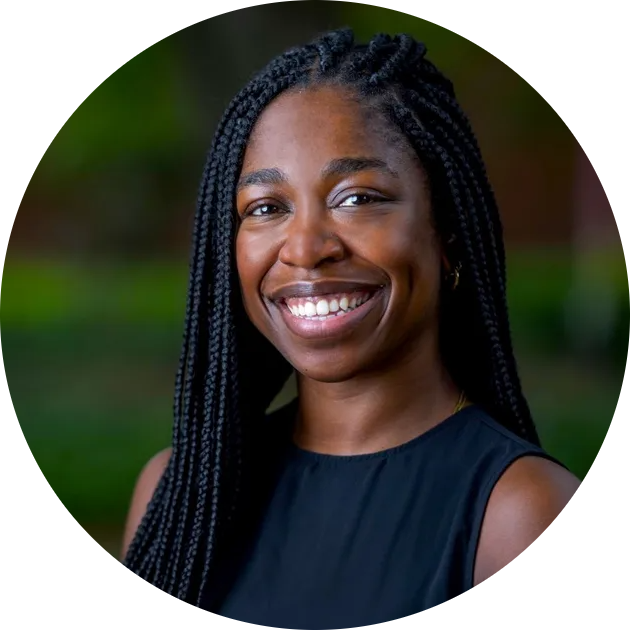 Context: Chidalu Onyenso came to Harvard Business School (HBS) having witnessed something that stayed with her: recurring energy blackouts during visits to Nigeria, and the consequences they had for small and medium businesses trying to operate in them.
Best sustainability move in B-school: Through HBS’s Business & Environment Initiative (BEI), Chidalu deepened her understanding of renewable energy financing and developed her concept for a fintech platform to help Nigerian businesses access affordable solar energy. In 2022, during her MBA, she co-founded Earthbond and in 2023, the company was a finalist in HBS’s New Venture Competition.
Result: Earthbond is now operating in Nigeria with plans to expand across Africa, providing small businesses with financing for clean and reliable energy. The MBA gave Chidalu both the entrepreneurial framework and the institutional support to take the idea from concept to company.
“How do you run a factory on that? A hospital? Or any business, really? So I started delving deep into that and researching renewables and finding out how we can build ways for small, medium businesses to access financing for solar.” – Chidalu Onyenso, on the energy access crisis that inspired Earthbond
Key Takeaway: Business school can do more than prepare you for someone else’s organization. If you arrive with a problem you want to solve, the resources – competitions, academic advisors, initiative networks – can turn an idea into a funded venture before you even graduate.
Karan Khimji, MBA ‘23, Harvard Business School (US)
 Context: Karan Khimji grew up in Oman and had seen the effects of climate change in his home country directly. When he arrived at Harvard Business School (HBS), he was already co-founder of 44.01 – a company named after the molecular mass of COâ‚‚ – which permanently mineralizes captured carbon dioxide by injecting it into a type of rock called peridotite.
Best sustainability move in B-school: Karan used his MBA not to find a job but to learn how to lead the organization he was already building. He leaned into HBS’s leadership curriculum to understand organizational culture, team-building, and what it takes to translate a long-term technical vision into an executable company strategy.
Result: 44.01 has since attracted international attention and investment as one of the most scientifically credible approaches to carbon removal. Karan has positioned the company as scalable anywhere peridotite rock deposits exist, which spans multiple continents.
“When I came to HBS I think that’s one thing I learned. How to lead an organization, lead a team, build organizational structure, understand organizational culture, and how all those intangible elements of a functioning company actually feed into implementing a longer-term vision.” – Karan Khimji
Key Takeaway: You don’t have to go into business school without a direction. If you already have a sustainability venture, an MBA can be the moment you learn to scale it – not just the idea, but the team and structure behind it.
Amy King, MBA ‘18, Warwick Business School (UK)
 Context: Amy King had an environmental chemistry degree and a Master’s in climate change and risk management, but she felt she couldn’t speak the language of business. After working at Barclays and Credit Suisse, she realized something was missing. She needed to understand business from the inside.
Best sustainability move in B-school: Amy enrolled in Warwick Business School’s Online MBA specifically because she could use it to bridge the gap between her scientific background and commercial credibility. She chose her dissertation topic deliberately: how businesses can act on climate change mitigation. In the process, she connected with WBS sustainability academic Dr. Fred Dahlmann, who became her academic advisor and a long-term professional collaborator.
Result: Amy’s MBA gave her the business fluency she had lacked and the credibility to operate at the intersection of sustainability and corporate strategy. Years after graduating, she and Dahlmann continue to cross-refer each other – she brings him into her real-world initiatives, and he invites her onto academic panels.
“I was missing the theoretical component of business. I had this great science background, but I just didn’t have the confidence to talk in business terms.” – Amy King
Key Takeaway: A sustainability background without business literacy can limit how much impact you’re able to have. An MBA can be the missing piece that lets you influence decisions from inside organizations, not just advise from outside them.
Jessica Iida, MBA ‘22, UBC Sauder School of Business (Canada)
 Context: Jessica Iida was already working as a Sustainability Operations Program Manager at Lululemon when she enrolled in the University of British Columbia Sauder School of Business Professional MBA (PMBA) in 2020. She wanted to deepen her business skills and the 24-month part-time format meant she could keep working while she studied.
Best sustainability move in B-school: Jessica chose a program format that let her build credibility without stepping away from the sustainability sector she was already working in. During the course of her PMBA, a new opportunity emerged: Deloitte came calling, and she joined their Sustainability & Climate practice in Vancouver. In 2019, before starting the program, she had already been named a Top 30 under 30 Sustainability Leader by Corporate Knights.
Result: Jessica is now a Manager in Deloitte’s Sustainability & Climate team, advising Canadian corporate clients on their ESG strategies. She credits her MBA with giving her the analytical tools to take complex, ambiguous sustainability challenges and turn them into structured business solutions.
“My degree helps to add credibility and create trust. I’m coming to the table with a business lens, as well as a sustainability lens. I can offer a balanced perspective and I think our clients appreciate that.” – Jessica Iida
Key Takeaway: If you are already working in sustainability, an MBA can be what moves you from practitioner to strategic advisor. The business lens it provides changes the level at which you are able to engage with clients and organizations.
Layla El-Zein, MBA ‘13, Rotterdam School of Management, Erasmus University (the Netherlands)
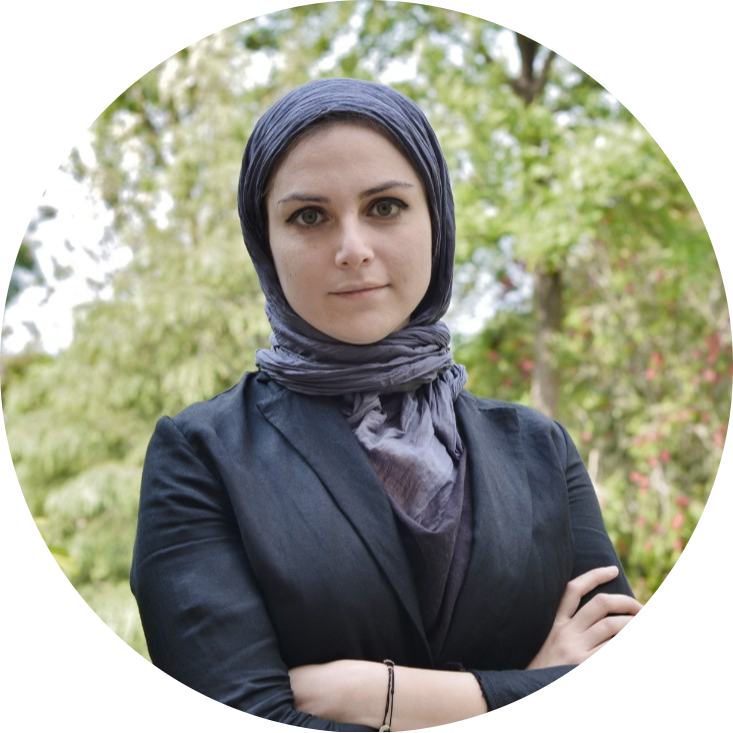 Context: Layla El-Zein came to Rotterdam School of Management, Erasmus University in the Netherlands with sustainability on her radar. The program sharpened what had previously been a personal conviction into a professional toolkit. She had been aware of sustainability issues before the MBA; what changed was her understanding of how to act on them inside organizations.
Best sustainability move in B-school: Layla used her summer internship to bridge theory and practice, securing a placement at Oxfam Novib in the Netherlands. During the internship, she worked on a project focused on sustainable fund management – applying the same investment logic she was learning in class to a development organization.
Result: The internship confirmed that sustainability work in the non-profit and development space draws on exactly the same management skills as the private sector: stakeholder strategy, operations, finance, and team leadership. Layla left with a clearer sense of where she wanted to take her career and a network that supported it.
“Sustainability is not just a trend, it is a critical issue and we are all responsible for it.” – Layla El-Zein
Key Takeaway: The sustainability internship doesn’t have to be at a corporate ESG team to count. Organizations working on development, social impact, or environmental policy require strong general management skills and the crossover experience can be exactly what shapes your long-term direction.
These five stories don’t point to one path into sustainability. They show that you can arrive as a scientist and leave as a strategist, start a company during your studies, use a part-time format to pivot while staying employed, or use an internship in a completely different sector to clarify what you actually want to build.
Each of these MBAs treated the program as a specific tool – chosen deliberately, pointed at a real problem, and used fully.










Comments